
High turbidity in water refers to the presence of excessive suspended particles that scatter and absorb light, making water appear cloudy or muddy. These particles may include silt, clay, organic matter, algae, microorganisms, and industrial solids. Turbidity is commonly measured in Nephelometric Turbidity Units (NTU) and is a key indicator of water quality in drinking water treatment, wastewater treatment, and environmental monitoring.
What Causes High Turbidity in Water?
High turbidity can originate from both natural processes and human activities.
Natural causes include heavy rainfall, flooding, riverbed disturbance, and soil erosion. During storm events, large amounts of sediment and organic matter are washed into rivers, lakes, and reservoirs, significantly increasing turbidity levels.
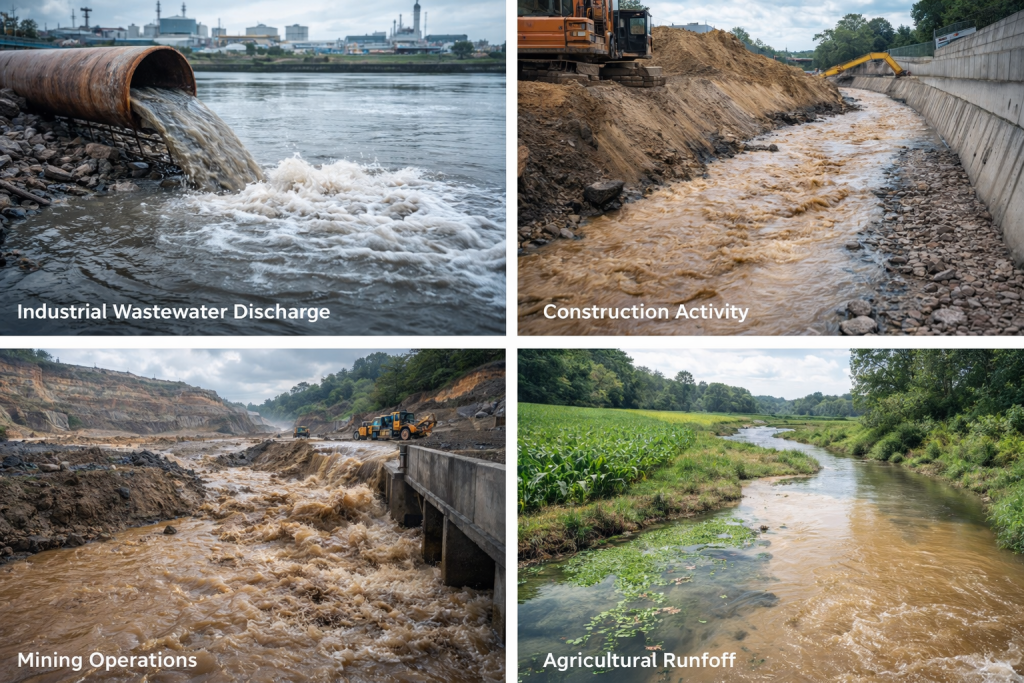
Human-related causes often involve industrial wastewater discharge, construction activities, mining operations, and agricultural runoff. In municipal systems, aging pipelines, sediment resuspension, or unstable treatment processes can also lead to elevated turbidity in distributed water.
Why is High Turbidity A Serious Problem?
Although turbidity itself is not a contaminant, high turbidity in water creates multiple technical and operational challenges:
- Reduced disinfection efficiency
Suspended particles can shield microorganisms from disinfectants such as chlorine, ozone, or UV, increasing microbiological risks.
- Interference with treatment processes
High turbidity overloads sedimentation, filtration, and membrane systems, leading to frequent backwashing, membrane fouling, and higher operational costs.
- Inaccurate water quality monitoring
Excessive turbidity affects optical sensors, including UV, color, and COD analyzers, reducing measurement reliability.
- Poor aesthetic and regulatory compliance
Cloudy water is unacceptable for drinking water supply and often fails regulatory turbidity limits.
Typical Turbidity Levels in Different Water Sources
| Water Source | Typical Turbidity Range |
| Treated drinking water | ≤ 1 NTU |
| Surface water (normal conditions) | 5–50 NTU |
| Surface water after storms | 100–1000+ NTU |
| Industrial wastewater | 50–5000+ NTU |
These ranges highlight why turbidity control is critical, especially for surface water and industrial applications.
How to Reduce High Turbidity in Water
Effective turbidity removal usually requires a combination of physical, chemical, and operational strategies.
Coagulation and Flocculation
Chemical coagulants and flocculants are added to destabilize fine particles and form larger flocs that can be removed more easily.
Sedimentation and Clarification
Clarifiers and settling tanks allow flocs to settle under gravity, significantly reducing turbidity before downstream treatment.
Dissolved Air Flotation (DAF)
DAF systems are especially effective for low-density particles, algae, and oily solids that do not settle well.
Filtration and Membrane Processes
Sand filters, multimedia filters, and ultrafiltration membranes are commonly used as polishing steps to ensure consistently low turbidity.
Online Turbidity Monitoring
Real-time turbidity measurement enables operators to adjust chemical dosing and process parameters dynamically, ensuring stable treatment performance during fluctuating influent conditions.
Online turbidity sensors provide real-time measurement of suspended particles in water. These instruments are typically installed at key process points such as raw water inlets, post-clarification outlets, filter effluent, or final discharge points. Continuous data allows operators to quickly identify turbidity spikes and respond before downstream processes are affected.
The Importance of Turbidity Control in Modern Water Treatment
Controlling high turbidity in water is essential for ensuring treatment efficiency, protecting downstream equipment, and meeting water quality standards. With increasing climate variability, extreme weather events, and stricter regulations, turbidity levels can change rapidly, making continuous monitoring and responsive treatment systems more important than ever.
Summary
High turbidity in water is a clear signal of excessive suspended solids and unstable water quality conditions. If not properly managed, it can compromise disinfection, increase operating costs, and threaten regulatory compliance. By combining effective clarification processes with accurate online turbidity monitoring, water utilities and industrial operators can maintain stable, safe, and efficient water treatment operations.
If you are facing challenges with high turbidity control or need reliable monitoring and treatment support, please contact GL Group to discuss your application and solution requirements.