
Against the backdrop of carbon neutrality and sustainable development, the wastewater treatment industry is transitioning from traditional pollution control models to a new phase centered on resource recovery and low-carbon operations. Wastewater is no longer merely a waste product, but rather a resource carrier containing water, energy, and nutrients. At the same time, as energy consumption and carbon emissions become increasingly pressing issues, improving energy efficiency in wastewater treatment and reducing the carbon footprint have become key priorities for the industry’s development.
The Hidden Carbon Footprint of Wastewater Treatment
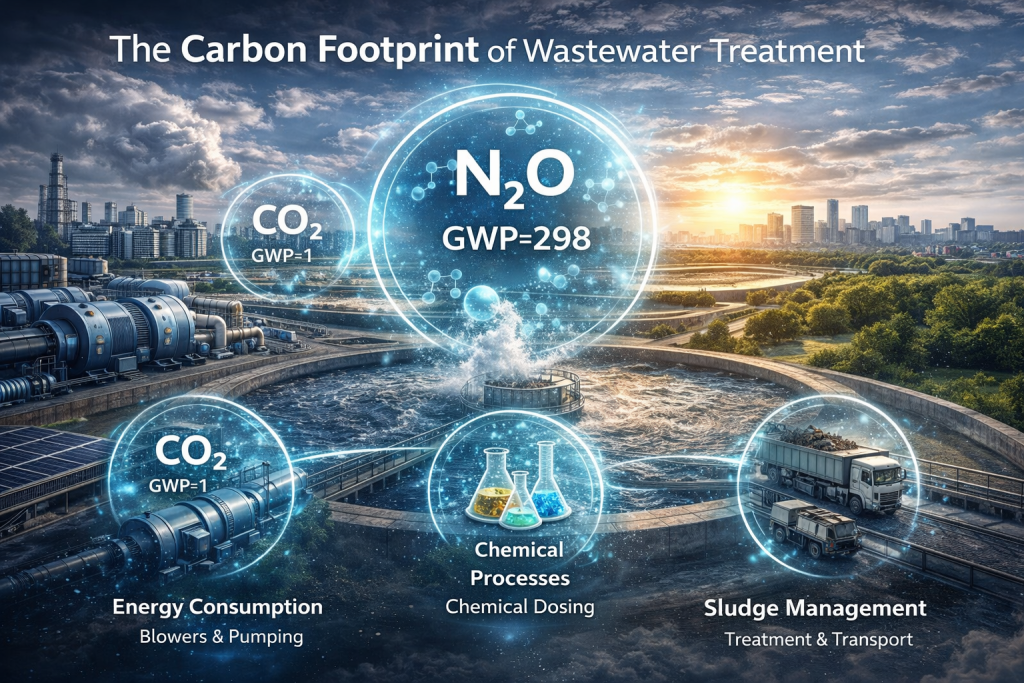
The carbon footprint of wastewater treatment is more complex than it appears. While electricity consumption is often considered the main contributor, it represents only part of the total emissions.
A critical but often overlooked factor is the emission of greenhouse gases such as nitrous oxide (N₂O). With a global warming potential approximately 298 times greater than CO₂, even small amounts of N₂O can significantly impact the overall carbon footprint.
Other contributors include:
- Energy consumption from aeration and pumping systems
- Chemical production and dosing processes
- Sludge treatment, transportation, and disposal
Understanding this full carbon structure is essential for developing effective low-carbon strategies.
Pathways to Low-Carbon Wastewater Treatment
To achieve meaningful carbon reduction, wastewater treatment systems must move beyond incremental improvements and adopt integrated strategies.
Biological Process Optimization
Advanced biological processes such as AGS (Aerobic Granular Sludge) and Anammox enable more efficient nitrogen removal while reducing energy consumption and greenhouse gas emissions.
Energy Recovery and Self-Sufficiency
Wastewater contains significant embedded energy. Through anaerobic digestion, organic matter can be converted into biogas, enabling energy recovery.
A leading example is the Marselisborg Wastewater Treatment Plant in Denmark, which has achieved over 150% energy self-sufficiency, producing more energy than it consumes.
Smart and Digital Optimization
The integration of AI and digital twin technologies allows real-time monitoring and optimization of treatment processes. This helps reduce over-aeration, excessive chemical dosing, and operational inefficiencies, leading to lower energy consumption and emissions.
Technology-Driven Solutions: The Role of GL
Achieving low-carbon wastewater treatment requires not only advanced processes but also precise system design and reliable equipment support.
At GL, we emphasize a data-driven and system-oriented approach to water treatment optimization. By leveraging advanced simulation tools such as GPS-X, treatment processes can be modeled and optimized before implementation, reducing the risks associated with trial-and-error modifications.
In addition, high-performance equipment plays a key role in reducing carbon emissions. Solutions such as:
- Precision chemical dosing systems to minimize chemical overuse
- Efficient solid-liquid separation technologies
- Optimized process control systems
With over a decade of experience in water treatment applications, GL supports clients in designing and optimizing systems that align with both operational and sustainability goals.
Conclusion
The future of wastewater treatment lies in the transition toward carbon-neutral and resource-efficient systems. By rethinking wastewater as a source of energy and materials rather than a burden, treatment facilities can play a vital role in achieving global sustainability targets.
At GL, we are committed to supporting this transition by delivering sustainable and efficient water treatment solutions—helping industries and municipalities take the next step toward a low-carbon future.