
Ion exchange water treatment is one of the most widely used technologies for removing dissolved ions from water. From industrial boiler systems to ultra-pure water in semiconductor manufacturing, ion exchange plays a critical role in ensuring water quality meets strict standards.
What Is Ion Exchange Water Treatment?
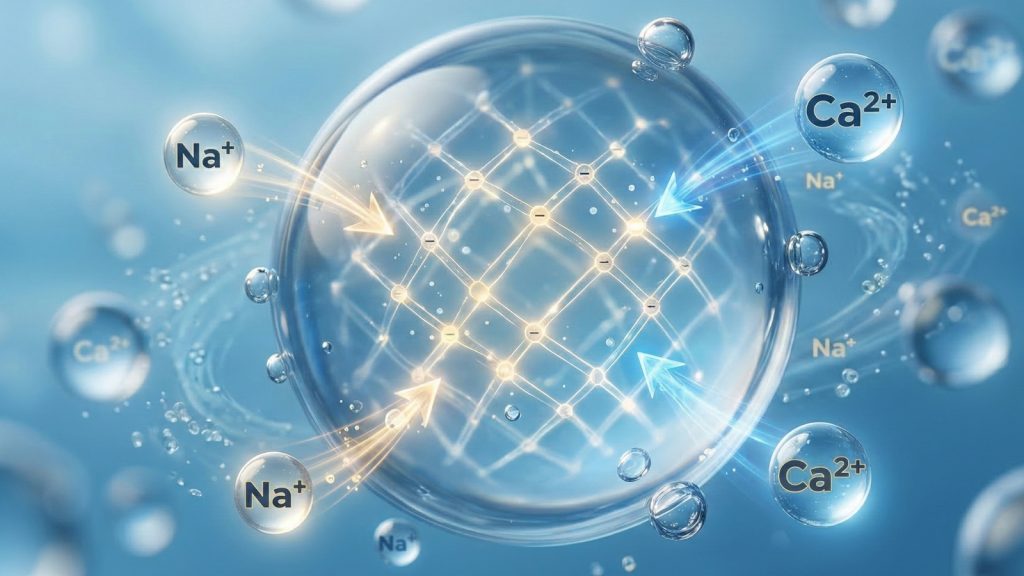
Ion exchange is a chemical process in which unwanted ions in water are replaced with more desirable ions using specialized materials called ion exchange resins.
These resins are typically small polymer beads that carry either positive or negative charges. When water passes through them, ions in the water are swapped with ions attached to the resin.
How Does Ion Exchange Work?
Cation Exchange (Removal of Positive Ions)
Cation exchange resins remove positively charged ions such as:
- Calcium (Ca²⁺)
- Magnesium (Mg²⁺)
- Iron (Fe²⁺)
These ions are replaced with sodium (Na⁺) or hydrogen (H⁺), making this process ideal for water softening.
Anion Exchange (Removal of Negative Ions)
Anion exchange resins remove negatively charged ions such as:
- Chloride (Cl⁻)
- Sulfate (SO₄²⁻)
- Nitrate (NO₃⁻)
They replace these ions with hydroxide (OH⁻), which can combine with hydrogen ions to form pure water.
Mixed Bed Ion Exchange
Mixed bed systems combine both cation and anion resins in a single unit. This allows for deeper purification and is commonly used to produce ultra-pure water with extremely low conductivity.
Types of Ion Exchange Systems
Water Softening Systems
Designed specifically to remove hardness (Ca²⁺, Mg²⁺), commonly used in:
- Residential water systems
- Boilers and cooling towers
Deionization (DI) Systems
Used to remove nearly all ionic impurities:
- Two-bed systems (separate cation and anion units)
- Mixed-bed systems (higher purity polishing)
Continuous Ion Exchange (EDI)
Electrodeionization (EDI) combines ion exchange resins with electrical current:
- No chemical regeneration required
- Ideal for high-purity applications
Key Components of an Ion Exchange System
- Pre-treatment unit: Removes suspended solids and chlorine
- Resin tank (exchange column): Core of the process
- Regeneration system: Uses salt, acid, or alkali to restore resin capacity
- Control system: Automated valves and monitoring
Applications of Ion Exchange
Industrial Applications
- Boiler feed water treatment
- Cooling water systems
- Chemical and petrochemical processes
High-Purity Water Production
- Semiconductor manufacturing
- Pharmaceutical production
- Power plants
Drinking Water Treatment
- Household water softeners
- Removal of heavy metals and nitrates
Advantages of Ion Exchange
- High efficiency in removing dissolved ions
- Capable of achieving very low conductivity levels
- Selective removal of specific contaminants
- Reusable resins reduce long-term operating costs
Limitations
- Requires periodic regeneration using chemicals
- Generates wastewater (brine discharge)
- Sensitive to fouling from organics or suspended solids
- Requires proper pre-treatment
Ion Exchange vs Other Water Treatment Technologies
| Technology | Function | Key Advantage |
| Ion Exchange | Removes dissolved ions | High precision purification |
| Reverse Osmosis (RO) | Removes most dissolved solids | No chemical regeneration |
| Ultrafiltration (UF) | Removes particles & bacteria | Low energy consumption |
Ion Exchange vs EDI
| Item | Ion Exchange | EDI |
| Chemical Regeneration | ✔ Required (acid/alkali/salt) | ✖ Not required |
| Water Quality | High | Ultra-high (more stable) |
| Operating Cost | Medium | Lower long-term |
| Initial Investment | Lower | Higher |
| Automation Level | Medium | High |
| Environmental Impact | Generates waste chemicals | More environmentally friendly |
Typical Process Flow
A common industrial water treatment system may include:
- Pre-treatment (sand filter + activated carbon)
- Reverse osmosis (RO)
- Ion exchange (mixed bed polishing)
- Final high-purity water output
Summary
Ion exchange water treatment is an essential technology for achieving high-quality water, especially when precise control over dissolved ions is required. Whether for softening, deionization, or ultra-pure water production, ion exchange systems offer reliable and efficient performance.
At GL Environment, we provide dosing equipment, and complete water treatment solutions tailored to your industry needs. From system design to equipment supply, we help you achieve stable, high-quality water standards. Contact us today to get a customized ion exchange solution for your project.