
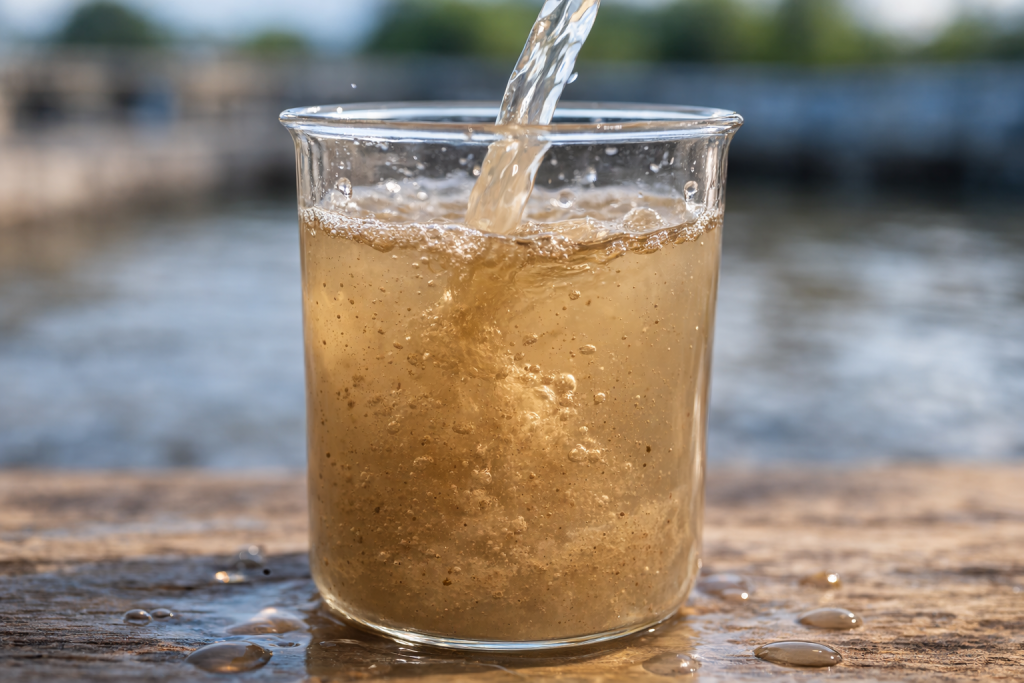
Turbid water refers to water that appears cloudy, murky, or opaque due to the presence of suspended particles. These particles may include clay, silt, organic matter, microorganisms, or industrial contaminants. In water treatment systems, turbidity is an important indicator of water quality because high turbidity can affect treatment efficiency, disinfection performance, and overall water safety.
Understanding the causes and control methods of turbidity is essential for municipal water treatment plants, industrial wastewater facilities, and drinking water systems.
What is Turbidity Water?
Turbid water refers to water that appears cloudy or muddy because it contains suspended particles. These particles may include soil, clay, silt, organic matter, microorganisms, or other contaminants that remain suspended in the water instead of settling to the bottom.
When light passes through water, these tiny particles scatter the light, which makes the water look opaque or dirty. The more suspended particles present, the higher the turbidity of the water.
Why is Turbidity Important?
Turbidity is an important indicator of water quality because it reflects the amount of suspended particles present in water. High turbidity often signals the presence of sediments, organic matter, microorganisms, or other contaminants that may affect water safety and treatment efficiency.
- Indicator of Water Quality
Turbidity is commonly used as a quick indicator of overall water quality. Clear water typically has low turbidity, while cloudy water suggests a higher concentration of suspended solids and potential pollutants. - Affects Disinfection Efficiency
Suspended particles in turbid water can shield microorganisms from disinfectants such as chlorine or ultraviolet (UV) light. This protection allows bacteria, viruses, and parasites to survive treatment processes, making effective turbidity control essential for safe water supply. - Impacts Water Treatment Performance
High turbidity can interfere with treatment processes such as filtration, sedimentation, and chemical dosing. Treatment plants may need to increase coagulant dosage or adjust operating conditions to maintain stable performance when turbidity levels rise. - Environmental and Health Concerns
Water with high turbidity may contain harmful microorganisms or pollutants that can pose risks to human health and aquatic ecosystems. Monitoring turbidity helps ensure that treated water meets environmental and drinking water standards.
How is Turbidity Measured?
Turbidity is typically measured using a turbidity meter and expressed in Nephelometric Turbidity Units (NTU).
Typical turbidity levels include:
| Water Type | Typical Turbidity |
| Drinking water | <1 NTU |
| Surface water | 1–50 NTU |
| Storm runoff | 100+ NTU |
| Raw wastewater | 100–1000 NTU |
Table of Turbidity Measured
Monitoring turbidity helps operators determine treatment performance and adjust processes accordingly.
How Turbid Water is Treated?
Several treatment processes are used to reduce turbidity in water treatment systems.
Coagulation and Flocculation
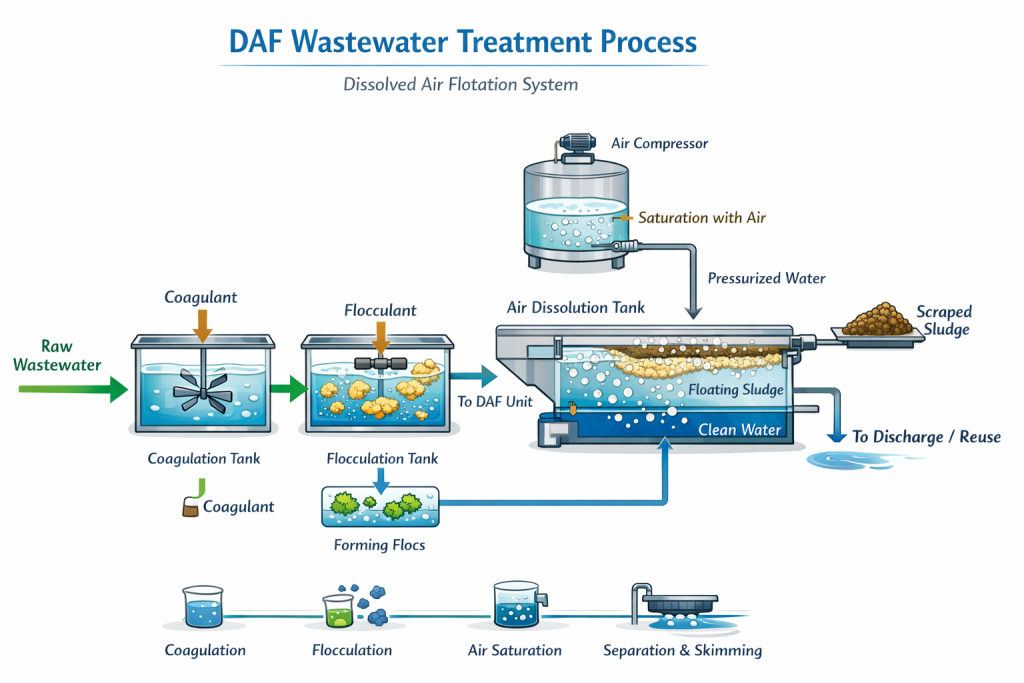
Chemical coagulants such as PAC or alum are added to destabilize suspended particles. Flocculation then allows these particles to aggregate into larger flocs that can be removed.
Sedimentation
In sedimentation tanks, heavier flocs settle to the bottom, removing suspended solids from the water.
Filtration
Sand filters, membrane filters, or other filtration technologies remove remaining fine particles.
Advanced Treatment
In some systems, dissolved air flotation (DAF) or membrane filtration is used for more efficient removal of turbidity.
How to Prevent High Turbidity in Water Systems?
Operators can control turbidity by:
- Optimizing chemical dosing
- Maintaining proper mixing conditions
- Monitoring influent water quality
- Implementing effective filtration systems
Proper system design and monitoring help maintain stable water quality.
Conclusion
Turbid water is a common challenge in both drinking water and wastewater treatment systems. By understanding the causes of turbidity and applying appropriate treatment processes such as coagulation, flocculation, sedimentation, and filtration, treatment facilities can effectively reduce suspended solids and improve water quality.
In the GL Environment, leveraging advanced equipment and professional system design, GL empowers clients to effectively address turbidity and other water quality challenges, ensuring stable, efficient, and compliant treatment performance. If you are seeking customized solutions for your water treatment project, contact GL Environment to learn how our expertise and equipment can optimize your system.